Top Fencing Companies in Denver, CO, 80014 | Compare & Call
There are 238 fencing companies server in Denver CO

FenceMakeOver has been restoring wood fences in Denver since 2008, specializing in pressure washing, staining, repairing, and installing fences and gates. We use premium BEHR stains that withstand Den...
Juan's Ornamental Iron
Juan's Ornamental Iron has been serving the Denver metro area for years, specializing in custom metal fabrication, deck construction, repair, and replacement. Many Denver homeowners face the common is...
Since its founding over a decade ago, 5280 Lawn Care and Home Repair has served Denver homeowners with a steady hand in landscaping, fence construction, and snow removal. Based in the Mile High City, ...

First Rate Fence & Access Control, based in Denver, CO, brings a lifetime of construction experience to every project. We specialize in fence and gate installation, repair, painting, staining, and wea...

A & J American Painters is a family-owned business in Aurora, CO, led by Angel, who has over 10 years of professional painting experience. Starting at a young age, Angel has worked alongside both novi...

Front Range Fence Company serves Castle Rock, CO, as a local fencing expert specializing in residential, commercial, and agricultural projects. Our team handles fence and gate installation, repair, pa...

Wright 1 Handyman Services is a trusted handyman, painting, and fencing contractor serving Denver, CO, and the surrounding metro area. Located conveniently near City Park and the Capitol Hill neighbor...
Boulder Fence has been serving Erie, CO, and the surrounding Boulder County area for over 20 years, offering a comprehensive range of fencing solutions. Our expertise includes wood, vinyl, steel, alum...
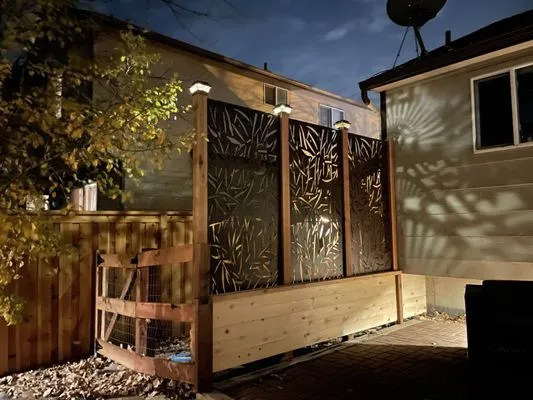
Greenview Solutions
GreenView Solutions, a veteran-owned company founded in 2015, began with a focus on irrigation and water management before growing into a full-service outdoor living provider. Built on a family legacy...

Open Range OHD serves homeowners and businesses across Denver, Boulder, Adams, Jefferson, and beyond, handling everything from garage door installations and repairs to custom gate builds. Based in Den...
Estimated Fencing Costs in Denver, CO
Questions and Answers
How do Denver's moderate soil corrosivity and termite risk influence material selection?
Denver's moderate soil corrosivity index accelerates the oxidation of standard steel fasteners and posts, leading to rust streaks and structural failure. We specify hot-dip galvanized or stainless-steel fasteners and post bases as a minimum. While subterranean termite pressure is slight to moderate, we avoid untreated wood in direct soil contact. Composite materials, naturally resistant woods like cedar, or steel posts with protective coatings provide long-term compatibility with these local environmental factors, preventing premature degradation.
Why is a 30-inch footing depth non-negotiable for fence posts in Denver?
Denver's 30-inch frost line depth is the primary stability factor. Posts set above this depth are subject to frost heave, where frozen soil expansion lifts the footing. This action will crack concrete, warp posts, and cause fence failure. In the Highland neighborhood's expansive clay soils, this failure is accelerated. The 2018 IRC (R403.1.4.1) mandates footings extend below this line. We design for full-depth concrete piers to prevent movement.
What is the typical timeline and route for a consultation in the Highland neighborhood?
We schedule initial consultations within 3-5 business days. Our standard route from the Mile High Stadium area uses I-25 north to the Highland exits, with a typical travel time of 25-35 minutes depending on traffic. The consultation includes a site survey, zoning assessment, and preliminary design discussion. Following this, we provide a formal proposal within 48 hours. Project start dates are scheduled based on material lead times and permit approval, typically 2-4 weeks from signed agreement.
What is the required process for utility locating and permitting in the Highland neighborhood?
Calling Colorado 811 to mark public utility lines is a legal and critical first step. Hitting a gas, fiber, or power line in the dense Highland neighborhood incurs major repair costs, service disruptions, and liability. After locates are marked, we manage all permit paperwork with the Denver Department of Transportation and Infrastructure (DOTI). This includes the fence permit application, site plan, and, if applicable, historic district approval. We coordinate this process to prevent delays, ensuring work begins only with all clearances in hand.
How do modern security gates comply with Denver's pool safety code?
Denver amends the International Residential Code (IRC Appendix AG) for pool barriers. The code mandates a 48-inch minimum height, self-closing hinges, and a self-latching device placed 54 inches above grade or on the pool-side of the gate. Modern smart-gate IoT systems integrate these mechanical requirements with digital access controls. An integrated, code-compliant latch that automatically engages upon closure meets both liability standards and modern security trends. We specify hardware certified to meet both IRC and Denver amendments.
How does Denver's 115 MPH V-ult wind speed rating affect fence design?
The 115 MPH 'Ultimate Design Wind Speed' (V-ult) is the engineering baseline per ASCE 7-22 standards. This rating dictates the wind pressure your fence must withstand. To survive peak storm season gusts, especially in exposed areas near Mile High Stadium, we calculate specific post spacing, concrete footing mass, and bracket connection strengths. A standard 6-foot panel requires closer post centers and deeper footings than in lower-wind zones. Our structural calculations ensure the assembly resists overturning and racking forces under this load.
What are my legal duties to neighbors before installing a fence on the property line?
Colorado Revised Statute 35-44-101, the 'Good Neighbor Fence Act,' governs shared boundaries. As of 2026, you must provide written notice to adjoining landowners at least 30 days before constructing or replacing a partition fence. This notice must include the proposed design, materials, estimated cost, and a request to share costs. The statute outlines a formal process for cost-sharing agreements and dispute resolution. For designated historic districts, separate Landmark Preservation Commission approval is mandatory before any notice is given.
What are Denver's zoning rules for fence height and placement?
Denver zoning enforces a 4-foot maximum height in front yards and 6 feet in rear/side yards. A 0-foot setback is generally permitted for boundary fences. Critical exceptions exist for corner lots, which require a visibility 'sight triangle' at intersections. Near high-traffic corridors like I-25, this triangle is strictly enforced to prevent visual obstructions for drivers. We conduct a site-specific zoning audit to map these triangles and ensure your design complies, avoiding a violation notice from the Department of Community Planning and Development.
